
“Ich scheiss auf Nasi Padang!”
Fran, 1999
That’s what I mumbled under my breath as I was about to have a food revelation, marking the beginning of my obsession with Balinese food.
We had been trotting down dark, deserted roads in the back of Kuta for more than half an hour and I couldn’t give a damn. The pumping tunes from the main drag had faded away and only mangled stray dogs glowered up at me, protective of discarded food rubbish paper.
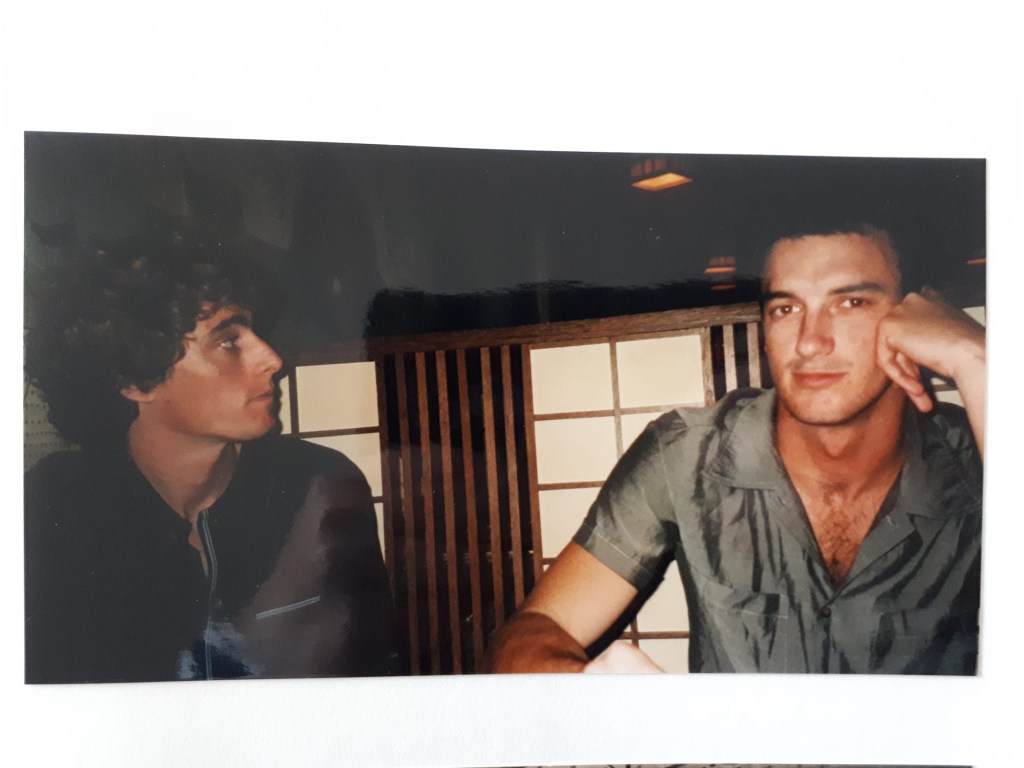
It’s 1999 and the two Aussie surfers (spoiler, one of them was Matt) we had met said it was good, worth the hike, despite our tired and sun-stricken bodies after a long day of languishing at the beaches of Bali’s peninsula.
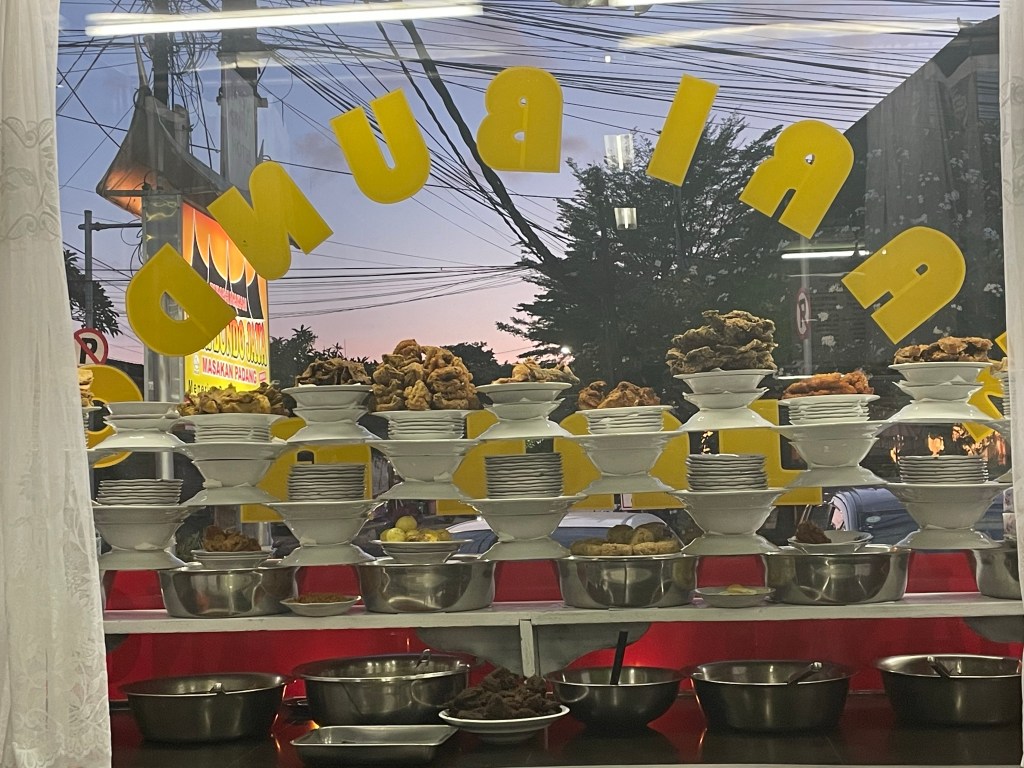
We finally arrived at a dimly lit window to a small room, containing three small tables.

A man sat slumped behind a counter and plates containing cooked food were craftily stacked three-tiers high in the window display.
There was fried chicken, boiled eggs glistening in vibrant yellow colours, indistinguishable vegetables, pieces of meat covered in thick brown sauce and small fish, fried whole, into crispy stiffness.
Nasi Padang
Nasi Padang is one of my favourite foods of all time. Originating from Sumatra, you could describe it as South-East Asian tapas.
You get a blob of rice and then choose whichever tasty morsel to go with – beef Rendang, fried or barbecued chicken, curried eggs, potato cakes, jackfruit in fragrant sauce, or sayur (tapioca leaf), crispy fried shrimp and fish.
The flavours are complex and coconut and curry based. It’s utterly delicious once you get over the fact the food has been sitting in the window for a while flies browse the buffet unperturbed.
I’ve never once gotten sick from it. And since this is my first post about food I will say this:
I distrust a hotel buffet way more than any street food in Bali, and so far buffets are the only place that has given me the dreaded Bali Belly. I’ve been eating the street food for decades now, besides some excess Chili revenge – without issue and with utmost pleasure.
[Matt just informed me that it wasn’t some deserted back street – but the main drag leading from Kuta to Seminyak. But back then there was no Seminyak as we now know it. The hustle and bustle pretty much ended after Legian.]
Nasi Campur
Makanan – food, glorious food. Bali is too plentiful with food culture to skip a meal, in fact, let’s add some.
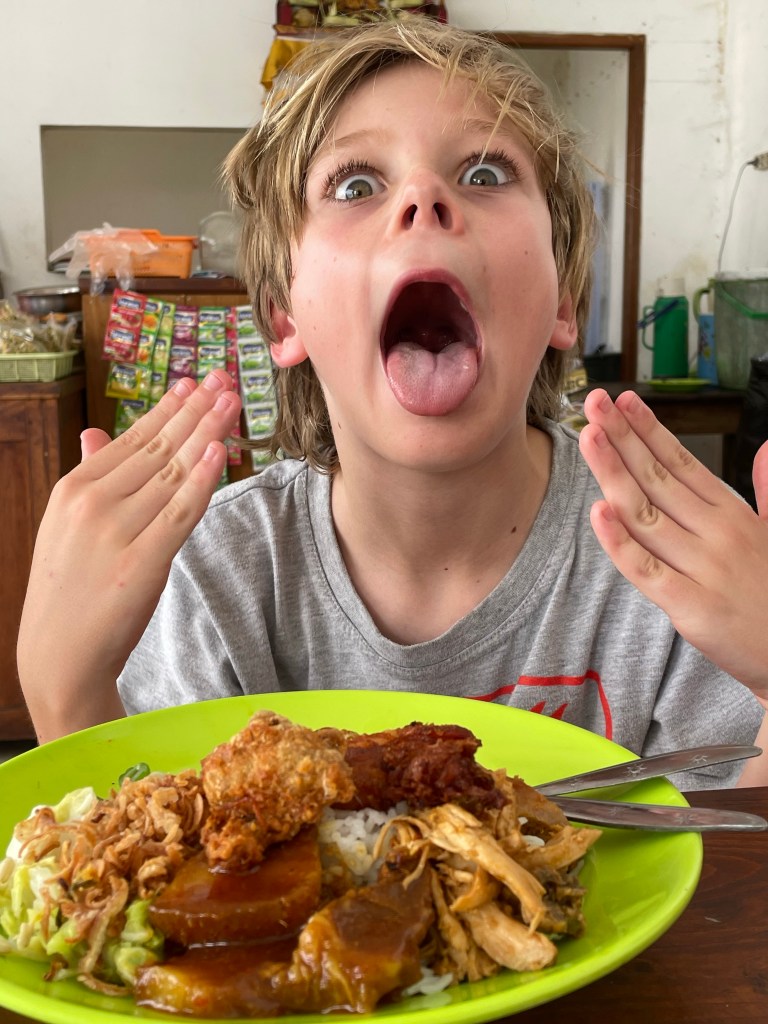
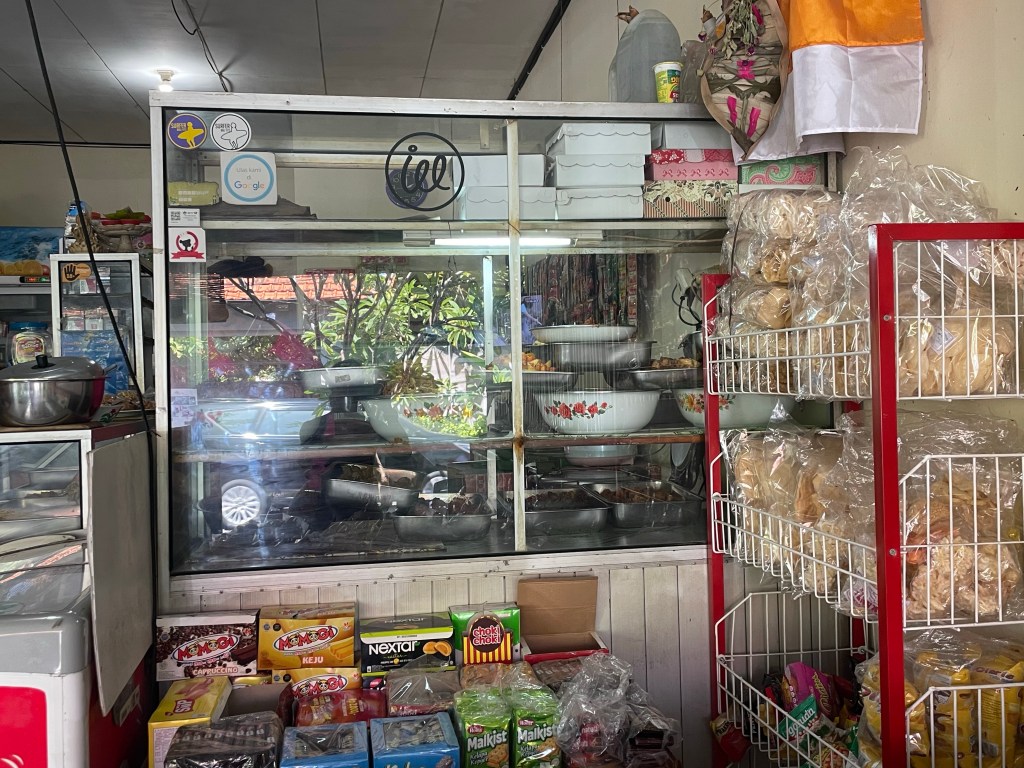
I’m equally fond of the Balinese version of Nasi Padang, called Nasi Campur. Like its Padang sister, the dishes are often displayed in the shopfront window and jackfruit, pulled chicken flavoured with Lemongrass and sprouts, tofu and fried tempe are among my favourites.

But often a full rice dish is too heavy, so why not have an awesome, fragrant Soto Ayam, which is a chicken broth made of turmeric, lemongrass and other indiscernible spices served with finely shredded vegetables, sprouts, and glass noodles. It’s usually a bit spicy and provides just enough sustenance to keep you going in the heat without a full belly.

Best enjoyed is a wholesome spicy soup with an iced Juice Jeruk, a thin orange juice with sugar syrup. The oranges here are quite different, somewhat bitter and less sweet. It’s the most refreshing cooler for a chilli-burning mouth.


Bakso
If you get peckish in the afternoon, ring-a-ding-ding, there is always a Bakso close at hand. Bakso stalls are usually constructed into the back of a motorbike, selling small bowls of soup consisting of delicate broth, meatballs (usually chicken) topped with some crispy wanton. It’s the perfect snack between lunch and dinner, and it’s when most Balinese and side streets or at the beach seem to be indulging into a Bakso. Not a hard habit to uptake.
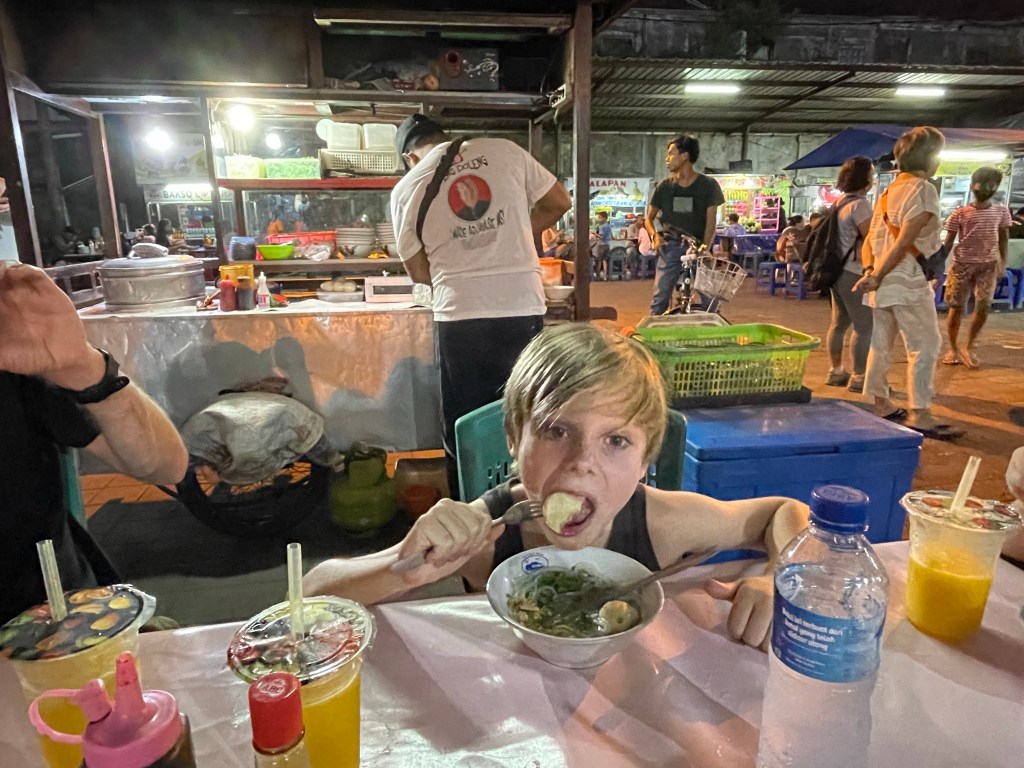
Music also announces the ice cream man (Balinese Mr Whippy), but it’s not Greenfields but some other equally as catchy tune. Again, the whole ice cream venture is balanced on a motorbike and can be waved down for some pleading kids’ faces.
What struck me is that here meal portions are much more reasonably sized, soup bowls are small, a small cup of rice with some sides mostly deemed sufficient and ice cream scoops are smaller than a golf ball, not some giant’s fist. It made me think how we constantly over-consume, and I think most Balinese would break out in laughter looking at the average Parmi at a pub.
The night markets
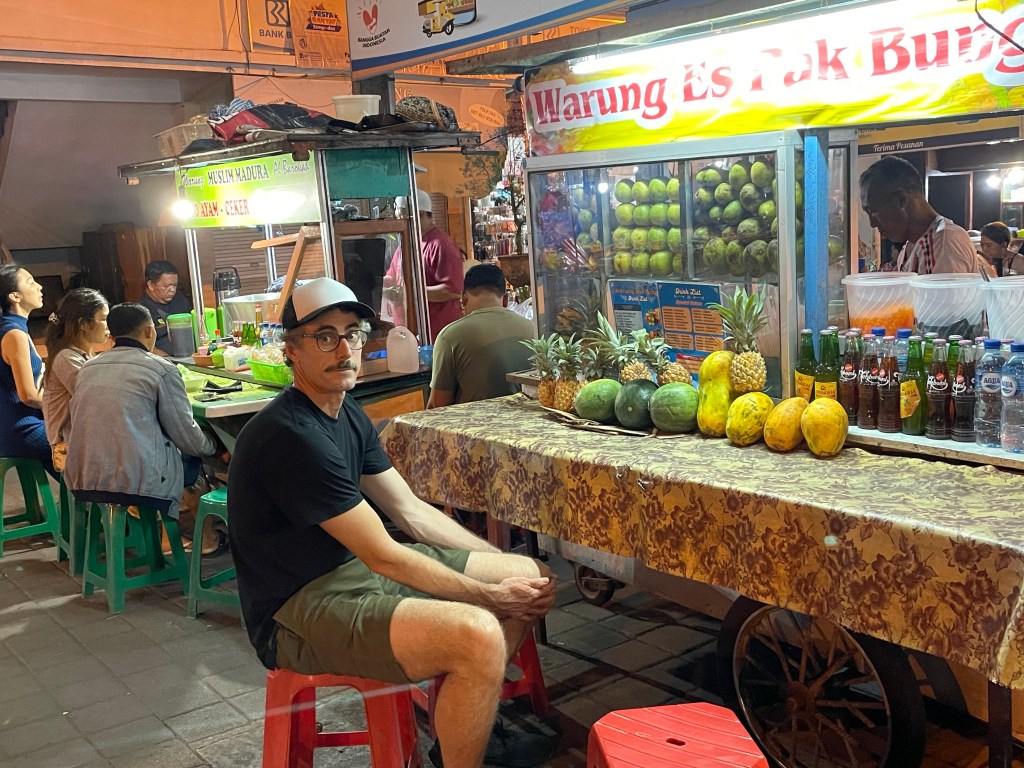
We were lucky to scout out a wonderful night market, a colourful cluster of food stalls offering an eclectic mix of dishes representing different regions and cuisines from Indonesia.
You will find night markets in most suburbs, you just got to look around a bit. People gotta eat!
Some favourites include Longton, a Turmeric-heavy curry soup with chicken, tofu, vegetables and rice cakes, of course the common favourite Satay. Here they are teeny tiny sticks of meat, not big kebabs, with the most delectable sweet peanutty sauce, so you feel Game to eat hundreds. Next stall you find a classic Nasi Goreng made skilfully in a massive iron-cast wok, sautéed green veggies (Cap Cay), Gado Gado and goat curry. A must try is Martabak, an omelet with scallions and chicken wrapped in paper-thin dough and fried to golden crispiness on a hotplate swimming in oil. I had an Ayam Bakar, a barbecued chicken so hot with chilies, I was schooled and laughed at by friendly by table-neighbours.

For dessert I can’t go past a pisang goreng (fried banana), hot and crunchy fresh from the wok. The kids love Roti Bakar (white bread fried on a hotplate with your choice of condiment such as chocolate, sweet milk, banana, peanuts and – believe it it not – cheese). My particular favourite is Terang Bulan (‘bright moon’) which is a textured, thick pancake made in a bespoke iron-cast form. It comes out spungy, is slathered in butter (ok, margarine) and best enjoyed with melted chocolate.
Roti Cenai
A particular favourite of Sam’s, Roti Cenai is a flatbread of Indian origin and needs to be folded with proper technique on the oily hotplate to achieve a flaky and in spots crispy parcel of goodness which then is dunked into an accompanying curry sauce. We’ve found in in Perth at varying degrees of flaky crispiness, and found these boys here nailing it:
Ikan Bakar
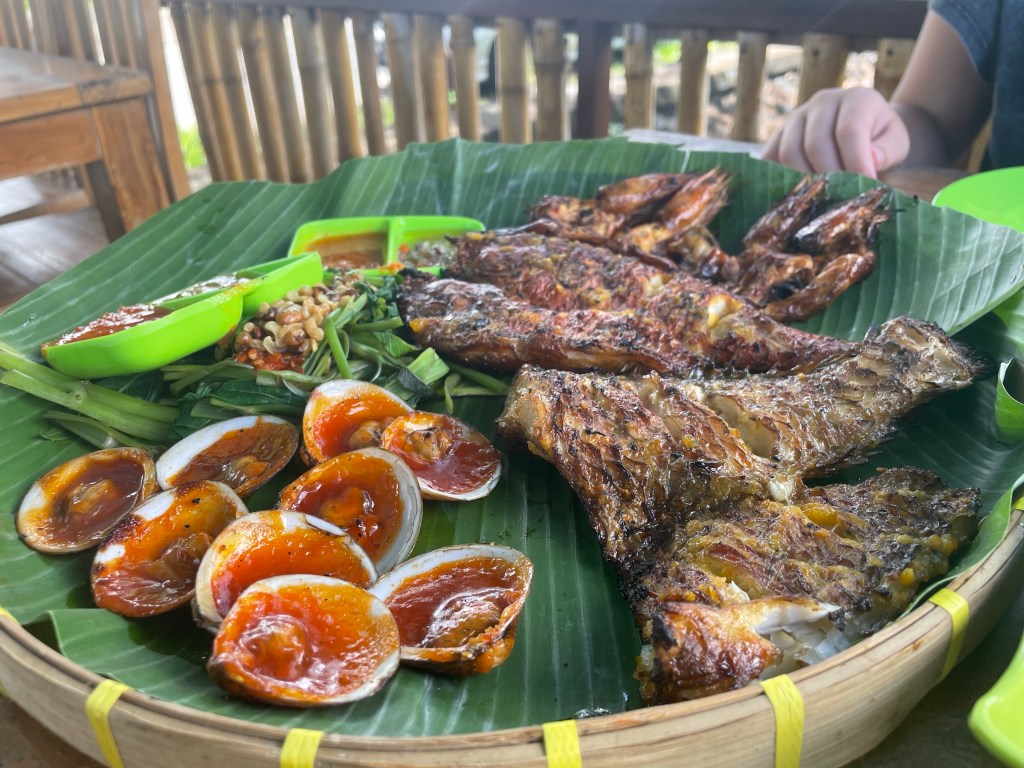
The way the Balinese prepare a seafood platter is a must-try, little mounds of vegetables such as water spinach (Kankung), assorted sambals, peanuts and seafood grilled on coconut husk framing the obligatory rice (nasi putih).
This seafood feast for four with the refreshing sugary ice tea cost us an incredible $24, complete with broth and the day’s special – octopus sate.


Matt had found Serangan through surfing, with unpopulated world-class waves rolling onto the shores of the island. Sadly, this spot is not accessible from the island anymore. Thanks to a large-scale private development, the path leading to the break is now fenced off.
“The investors have closed off the land to all surfers,” confirmed Curtis Lowe, project manager at Project Clean Uluwatu, to Surfline.
Sadly that meant the end for a cluster of small warungs which had been servicing the low-key surf tourism on the island.
The break can still be accessed, but it’s not straightforward.
 Pack Less
Leave a comment