
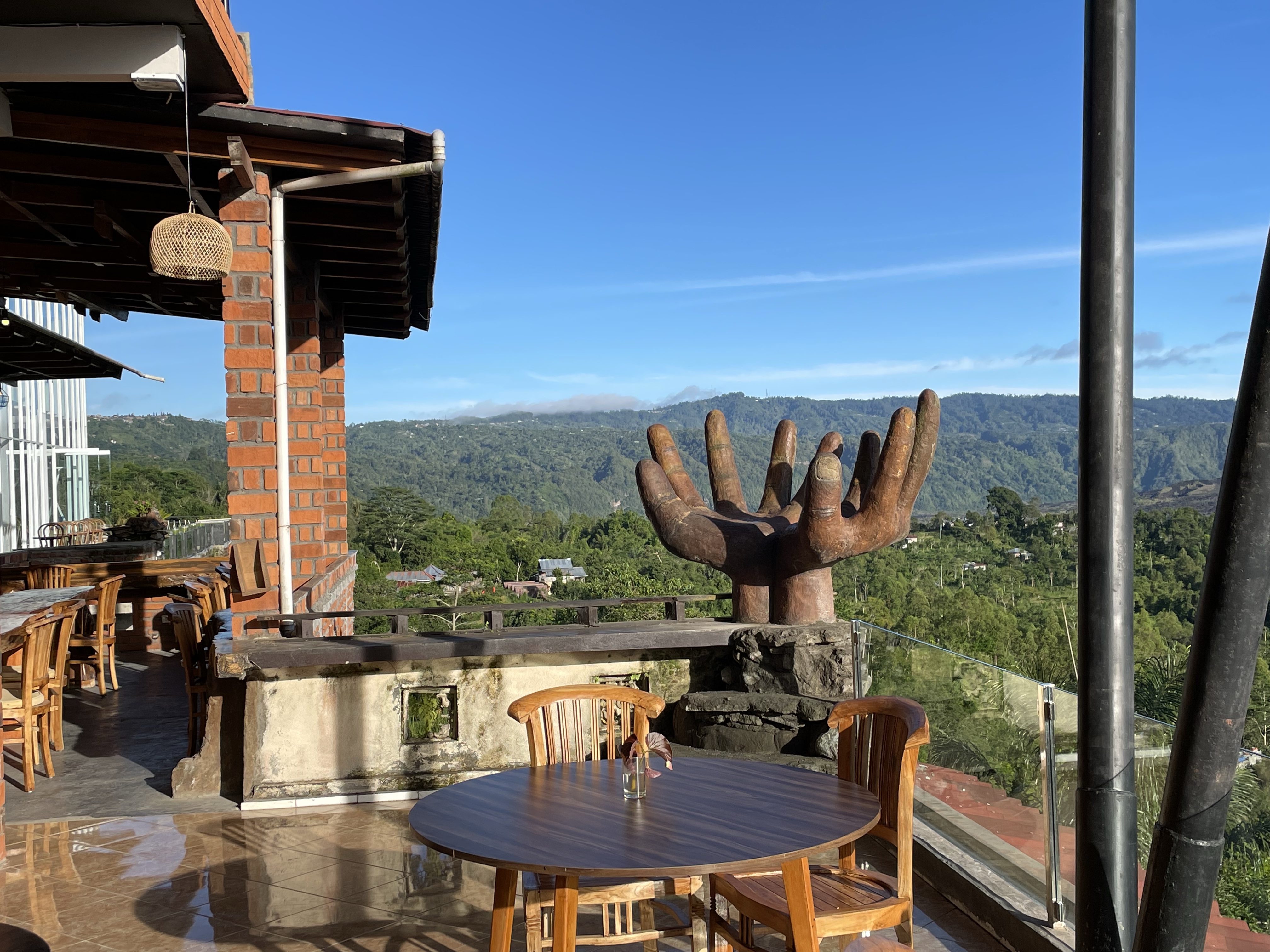
A truly fantastical view greets me as I walk through a palatial cafe foyer, evoking childhood memories of the Childlike Empress’ ivory tower in Michael Ende’s fabulous tale The Neverending Story.
The invitation from Krystyna came after I foolishly accepted an offer by a member of Bali’sTrail Runners (BTR) to join them for a nine or even 16km run.
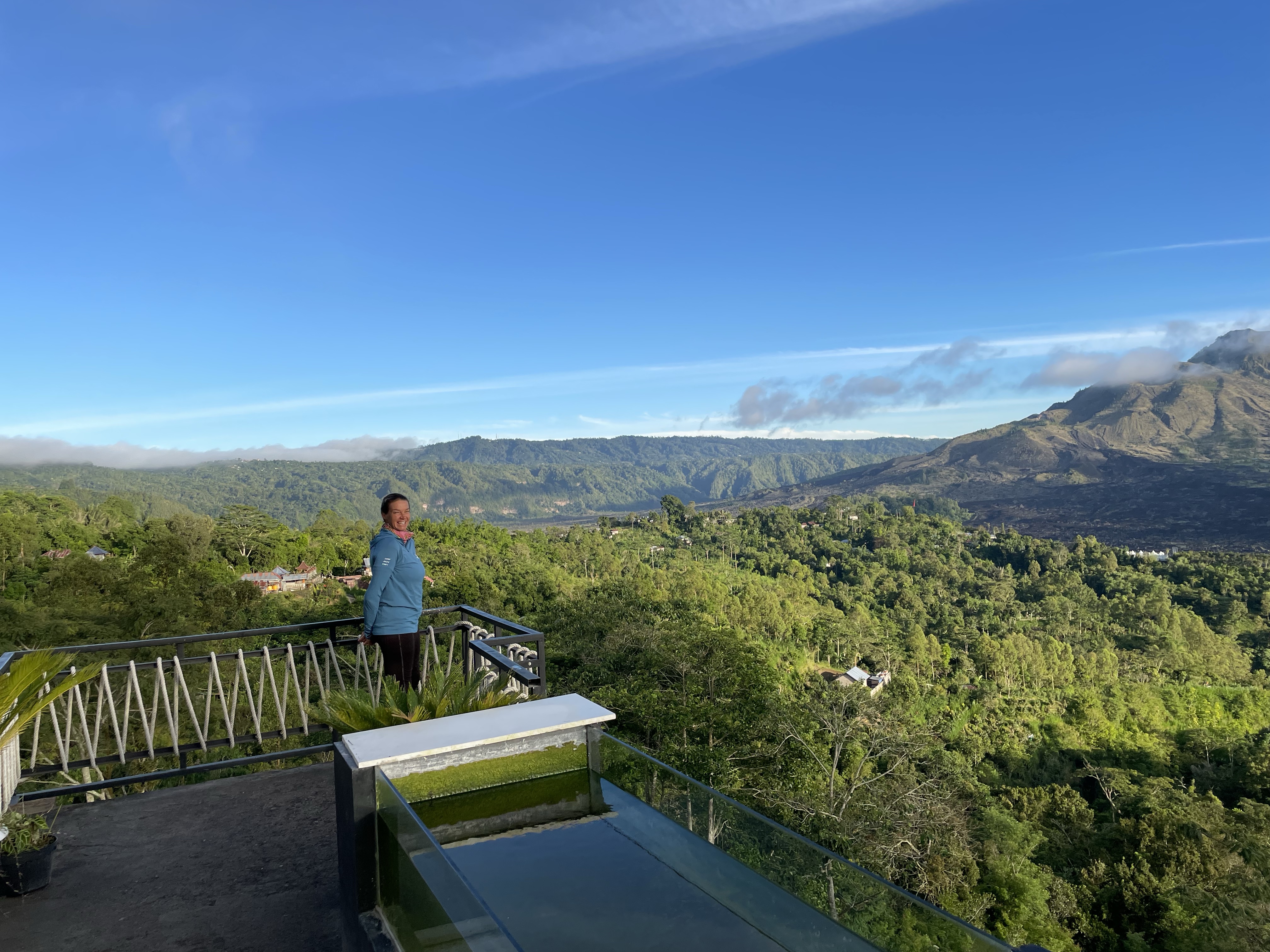
Clouds are draping over a mountain top like a wafting veil, while below a vast lake glistens in the morning sun, untouched yet by any shadow from the massif looming on the opposite side of the caldera – Mount Batur.
The cafe is perched on the vulcanic rim of the caldera, forming the large depression which now homes Danau (lake) Batur, lying within the Kintamani region.
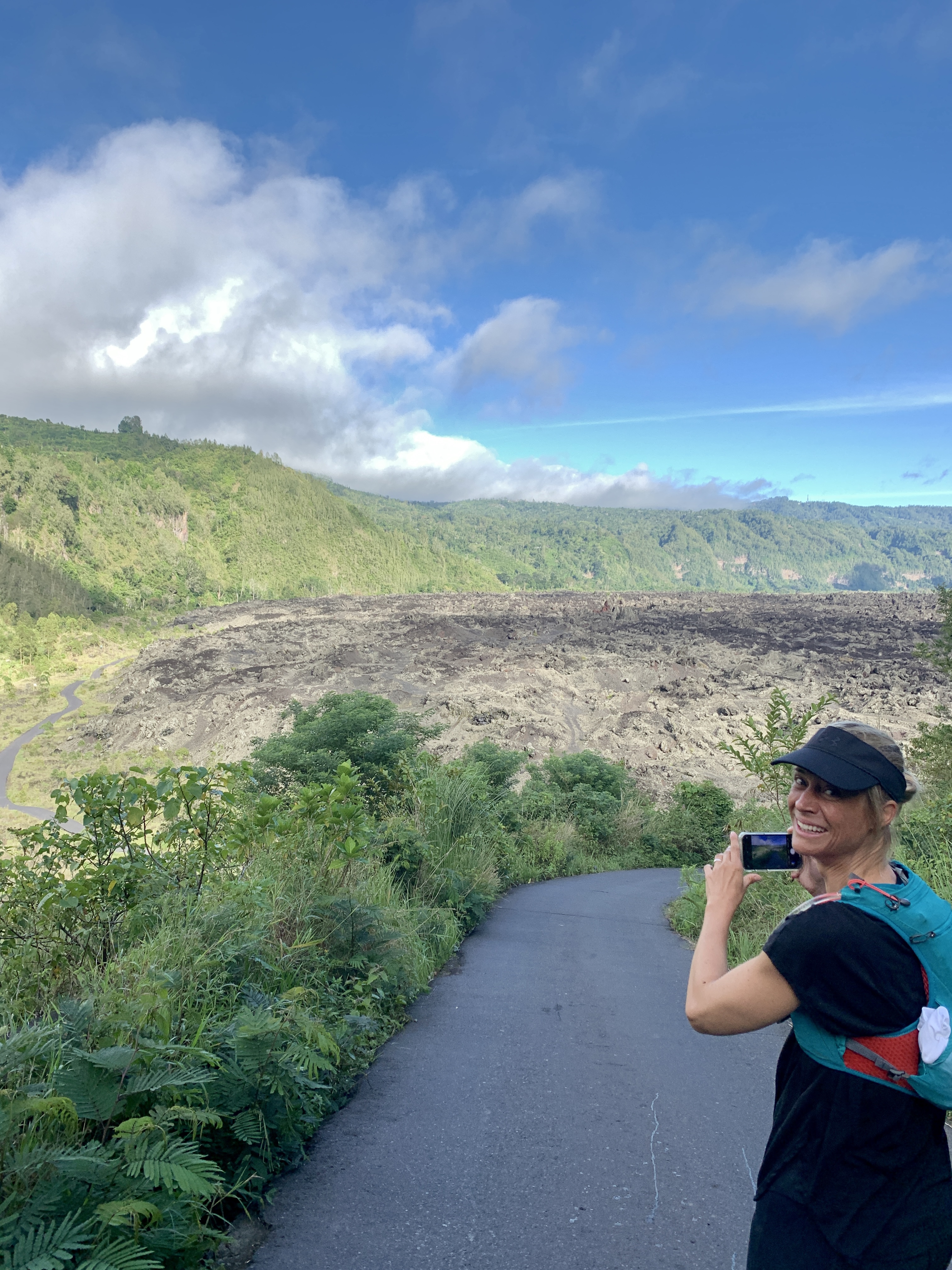
Wearing long sleeves for the first time since arriving in Bali, we take in the fresh air, lacking the usual humidity, as barren, black vulcanic fields and green forests sprawl peacefully before us, the bulk of weekend visitors yet to arrive.
Kintamani is home to several ancient villages with its focal point Mount Batur, an active volcano located at the center of two concentric calderas north- west of Mount Agung, about an hour and a half drive from Denpasar.
Krystyna – or, as I quickly should learn – KK, suggested to do a less high-voltage version than the BTR together to give me a feel for the area and losen the ligaments.
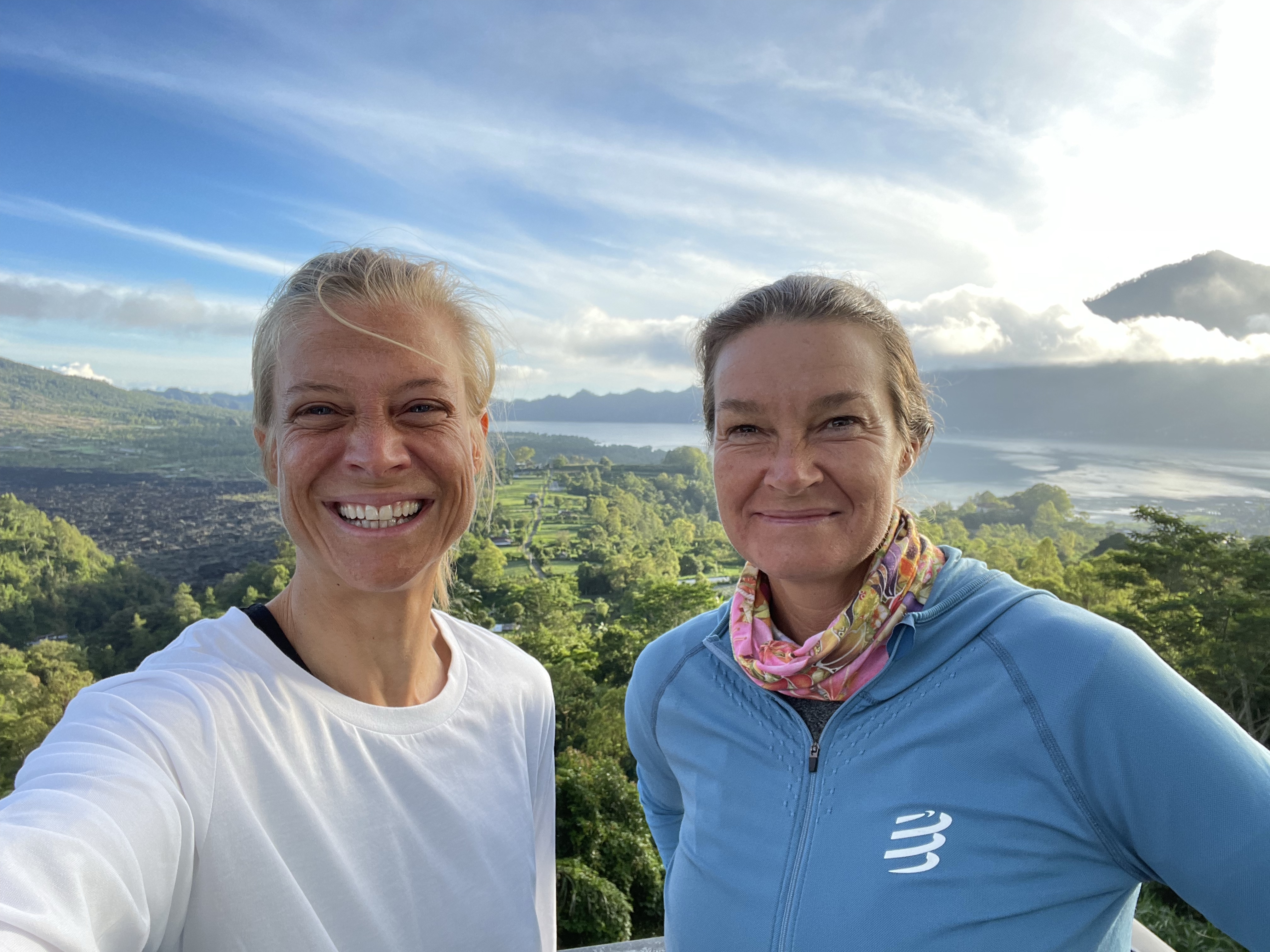
KK really deserves her very own blog post, she’s probably one of the most interesting people I’ve met and our friendship started over daily coffee at Kopi Kiosk.
A Fellow of the Royal Geographical Society UK, KK is an expedition leader, adventure racer and Indonesia expert fluent in Bahasa.
KK is not only the team leader for a high-profile Indonesian tourism infrastructure project and regularly shakes hands with government ministers, she also leads an inspiring sustainable tourism project called idGuides, which (in very short terms) weaves walking trails through Bali and the wider archipelago with the aim to develop village-based employment and green revenues along traditional routes the Balines have travelled on for centuries.
She is also an incredible racontresse and we quickly bonded over shared interest in endurance sport and the outdoors.
Pointing along the varied terrain below us she describes the different routes we could tackle and, taking the perfect conditions if the day into account, we quickly decide on a hike-run through the lava fields into the forest and up the foothill of Mr Batur.
Earlier, on the car ride to Kintamani, masterfully helmed by KK’s trusty driver Wayan, we had laughed at the nouveau Instagram culture of experiencing adventures solely for feed curation rather than ‘IRL’ (in real life, for those born before Gen Y).
It was a bit of hilarity and hypocrisy when we positioned KK’s phone on a rocky outcrop to film us, two middle-aged women, running through the barren lava fields.
We quickly traversed the area, part running part hiking, and entered into more forested terrain, with vegetation I’d found surprising.
Instead of the dense, lush tropical forest usually found in Bali, we walk into light pines and evergreens, indigenous to the Indonesian highlands.
But Kintamani, situated about 1600 metres above sea level, is much dryer, and home to a much hardier people than the Balinese of the coastal regions.
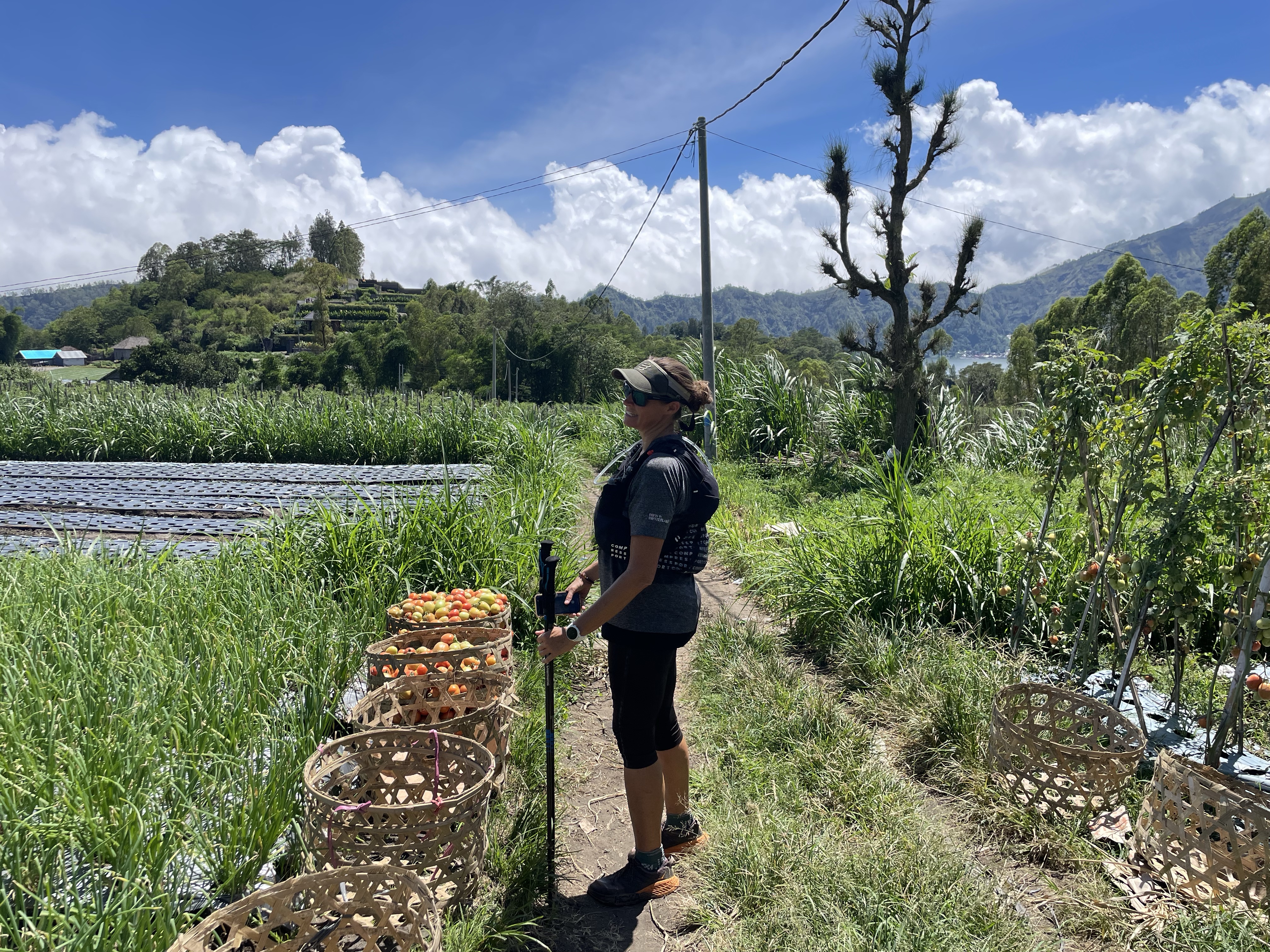
Entertained by our lively conversation and the wealth of impressions this inland part of the island has to offer, KK’s trail leads us past local farmers and their crops; small red onions and shiny red tomato thickets, announced by a potpourri of smells.
“French onion soup, this is why I always dream about when I come past here,” she chuckles.
“Then, further down, near the tomatoes – its Gazpacho.”
Ever so often KK would stop for a chat with the farmers, and in passing, I mention how lucky I thought they were to live in such a beautiful place.
“They would not necessarily think so,” she says, explaining that the area was hard to farm due to its dry climate. The monsoon rains responsible for the lush tropical vegetation on the coast would often stop short of reaching the fields of Kintamani, she tells me.
And regularly family members would work in the familiar high-dense tourism spots to support the family and their farms.
“A lot of the spa and beautician staff you meet are from this area,” she says.
To irrigate the dry fields situated on the steep slopes of Mt Batur, farmers have to pump water uphill into a makeshift dams to irrigate the crops. And theses generator-fuelled pumps are very expensive, she explains. Farmers would form co-ops to share the cost for the equipment, meaning the pump would not always be available.
Chatting to an onion farmer, she inquires if a new irrigation system she spotted was now running on solar power. She also tells me that the electricity lines we see on the base of the mountain were new and cause for great excitement in the village.
Talk becomes more difficult as we contour steep, narrow paths through dense vegetation up the mountain, the heat of the day rising.
We stop at the beautiful ornamental gates, the Angkul-Angkul of the local Pura (temple), where, so KK explains, the summit of Mount Batur perfectly alignes with that of his big brother – Mount Abang – on the other side of the caldera.
Further up the mountain we are treated to beautiful new perspectives of the landscape, and we are able to make out a cluttering of houses across the lake, the ancient village of Trunyan, which dates back to 911 AD.
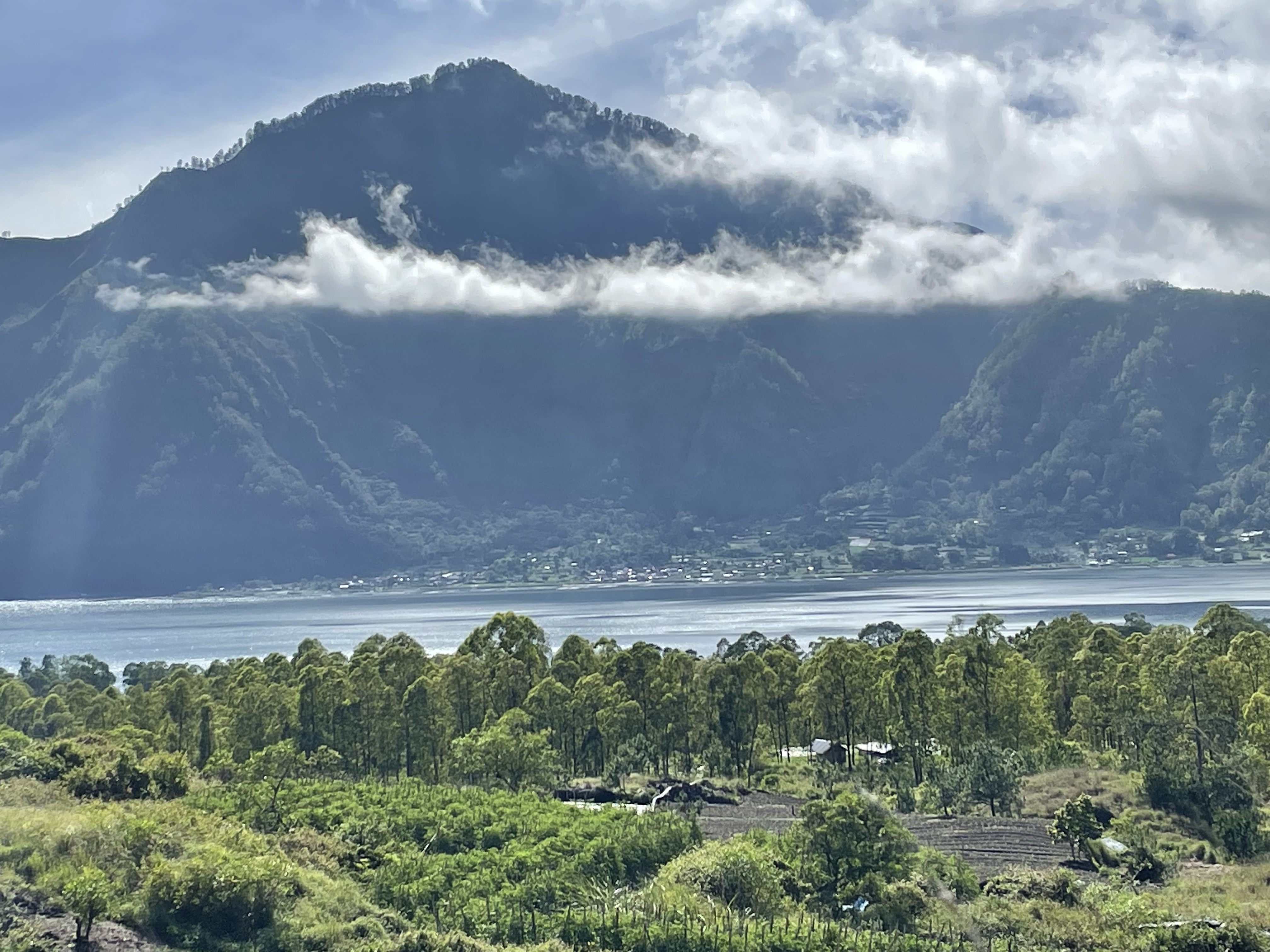
Trunyan, so she says, has an eerie vibe, and I’ve heard from Balinese who reject the idea to visit the place.
“It doesn’t get sun in the morning, so there is a feeling of not being able to wake up,” KK explains.
Trunyan is notable for its treatment of the dead, and KK points out the orange terracotta-tiled roof of the graveyard on the opposite shore.
There, the dead are not buried, but openly placed on the ground and covered with cloth and bamboo on their path to decomposition.
“One must gain permission to visit the graveyard,”she says.
“The village is the cradle of the Bali Aga, the ancient Balinese traditional way of life which was animist.”
Animism is the belief that all natural things, such as plants, animals and rocks, have spirits and can influence human events.
Despite Hinduism the islands most prominent religion, remnants of these ancient beliefs are still present in daily life.
Mount Batur’s summit will wait for another hike and we discuss the difficulties of running downhill, and decide it harder than the ascent.
In that moment two of the BTR trail runners woosh past us, down the rocky path, at lighting speed.
I’m so glad having taken the scenic tour with KK’s expertise commentary of the region, the people and their culture.
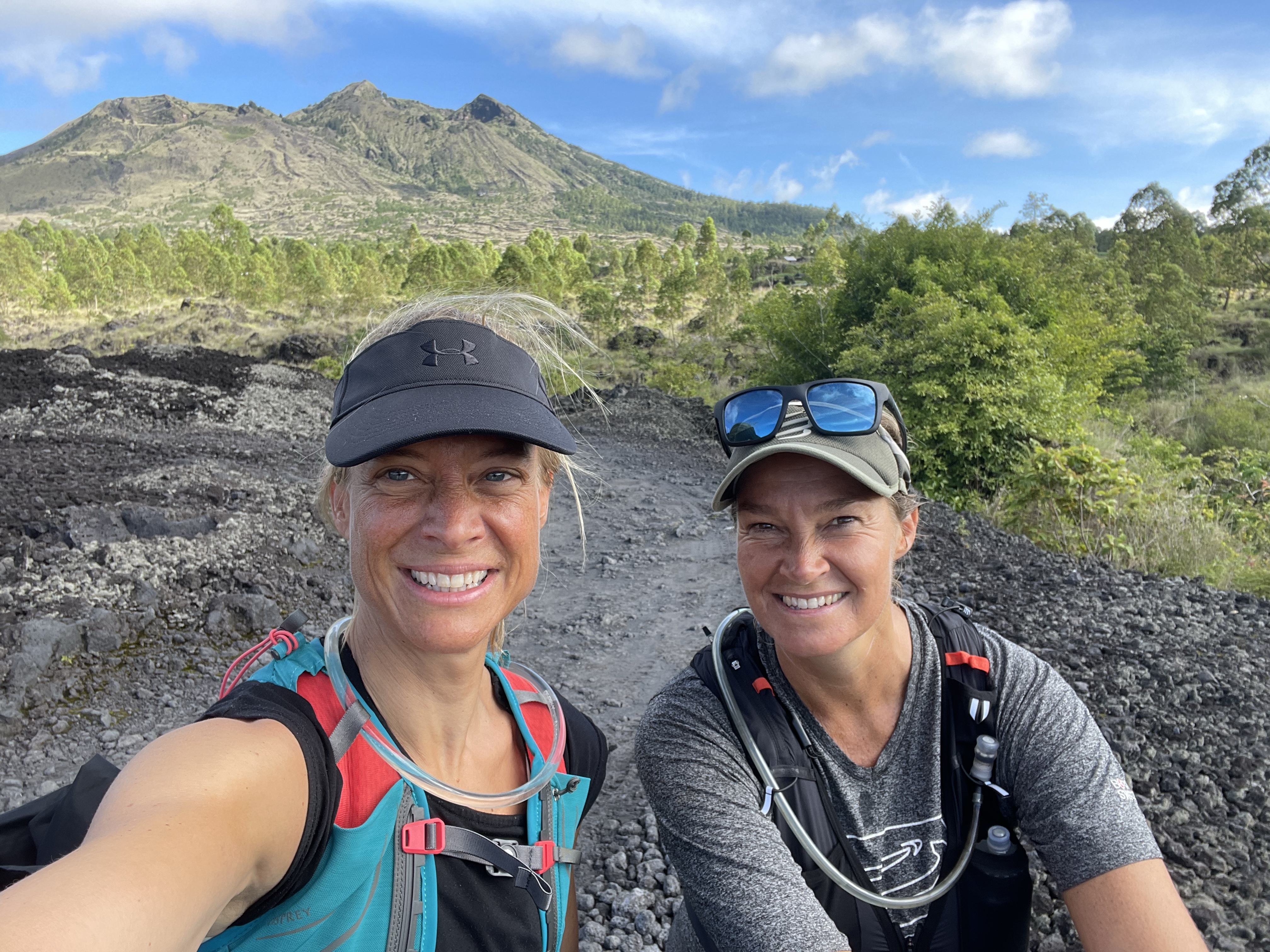
As we dust our pants off and meet Wayan at the negotiated check point, KK points at the volcanic ridge above Trunyan at Lake Batur’s opposite shores.
“We do this one another time,” she says.
 Pack Less
Leave a comment