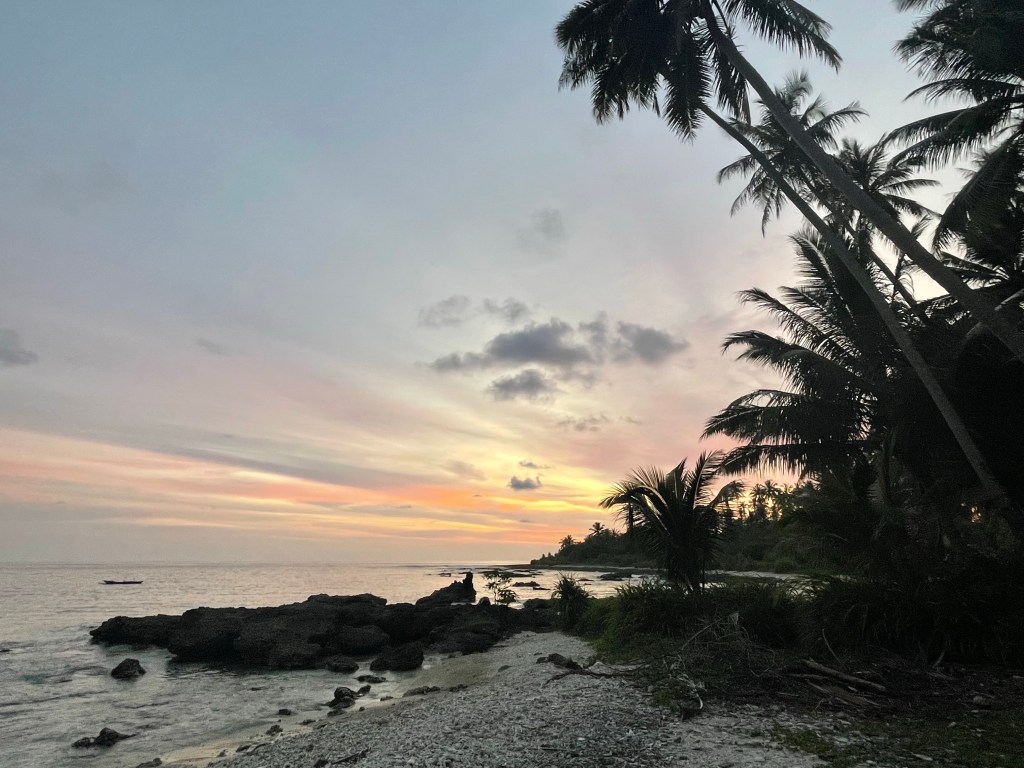
Si-Meh-Loo. This is the best phonetic spelling I can come up with for the name of the island we are currently on.
Never heard of Simeulue? Neither had I a couple of months ago, nor had most of our Balinese friends when we told them where we are going. Its neighbour Nias, to the south-east, however, is a well-established (spell: crowded) surf destination.
The island, 150km off Sumatra’s west coast, is part of Indonesia’s Aceh Province.
With lush green forests, languishing beaches and coral outcrops, Simeulue is of primal and untouched beauty.
Just over 90,000 people, pretty much all of Muslim faith, call this island home, which is a fact that needs to be considered, especially by female travellers, as modest dressing needs to be observed.
Surfing is the main driving force for the few travellers finding their way to this rural island.
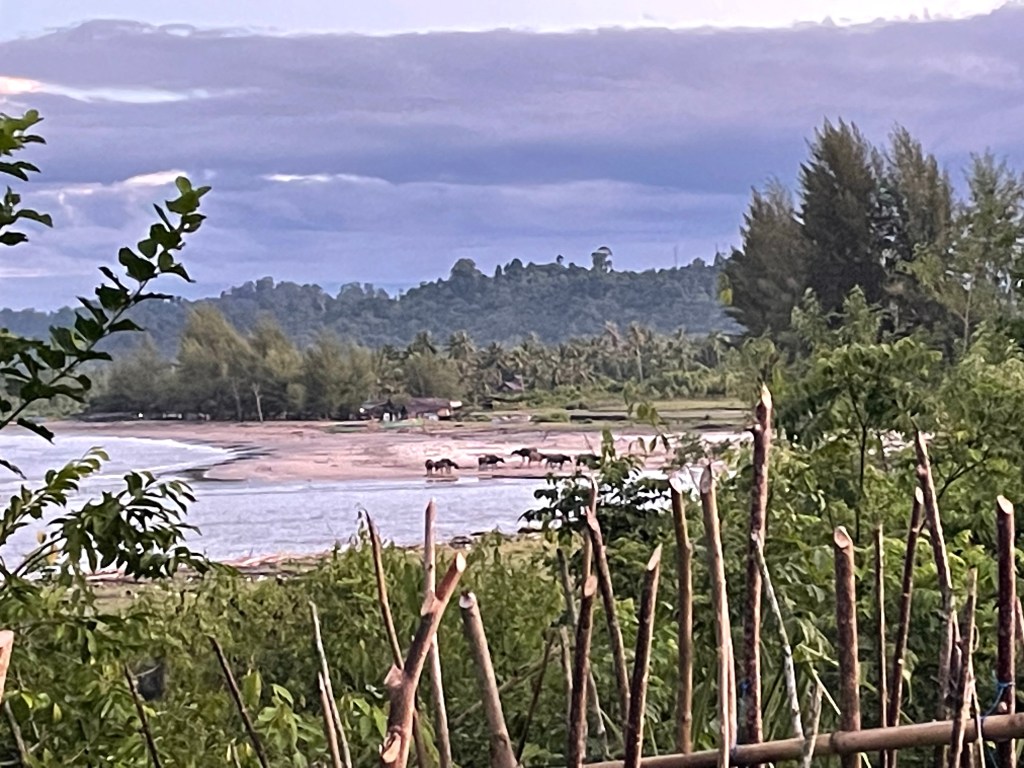
Small villages (desas) line the road, which contours the coast of the island. There is only one bigger town, Sinabang, the administrative seat of the region.

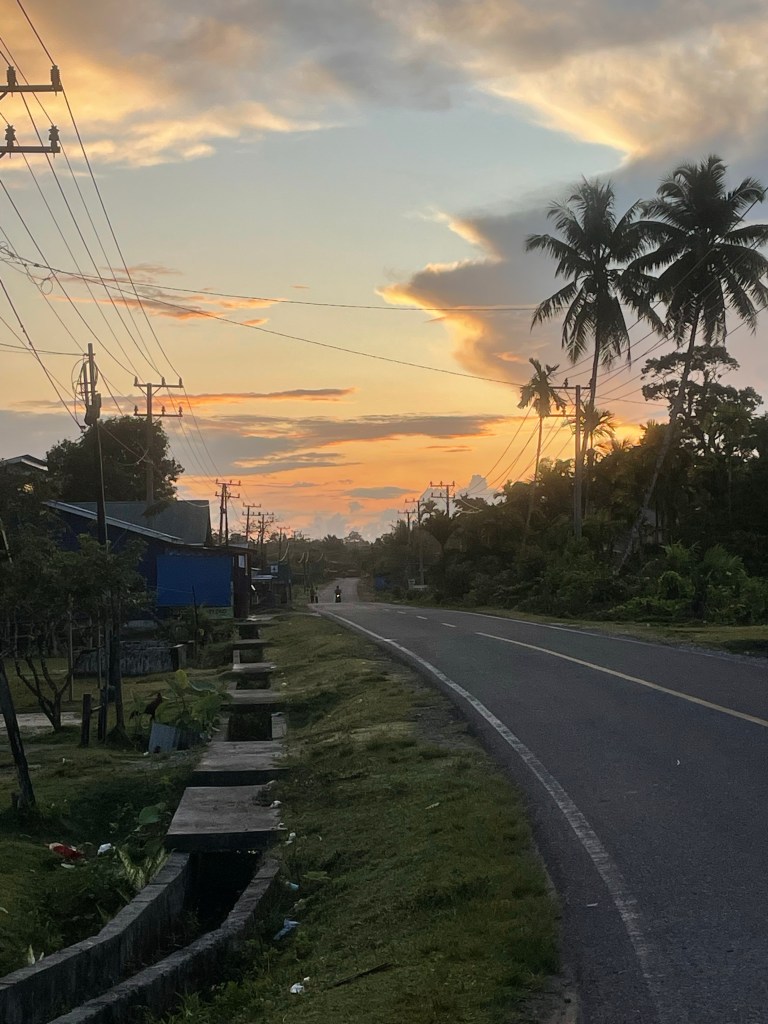
Simeulue’s roads are lined with local dwellings, buffalos, goats chickens, palm trees and soccer fields where every evening the local boys chase a ball. The air smells of the sea and fresh cloves, which are spread out on large mats.
The cloves grow on tall trees, our host Ilan explains, and the harvest is fairly dangerous due to the height of the trees. The cloves are sold on to make Indonesia’s famed fragrant Kretek cigarettes.
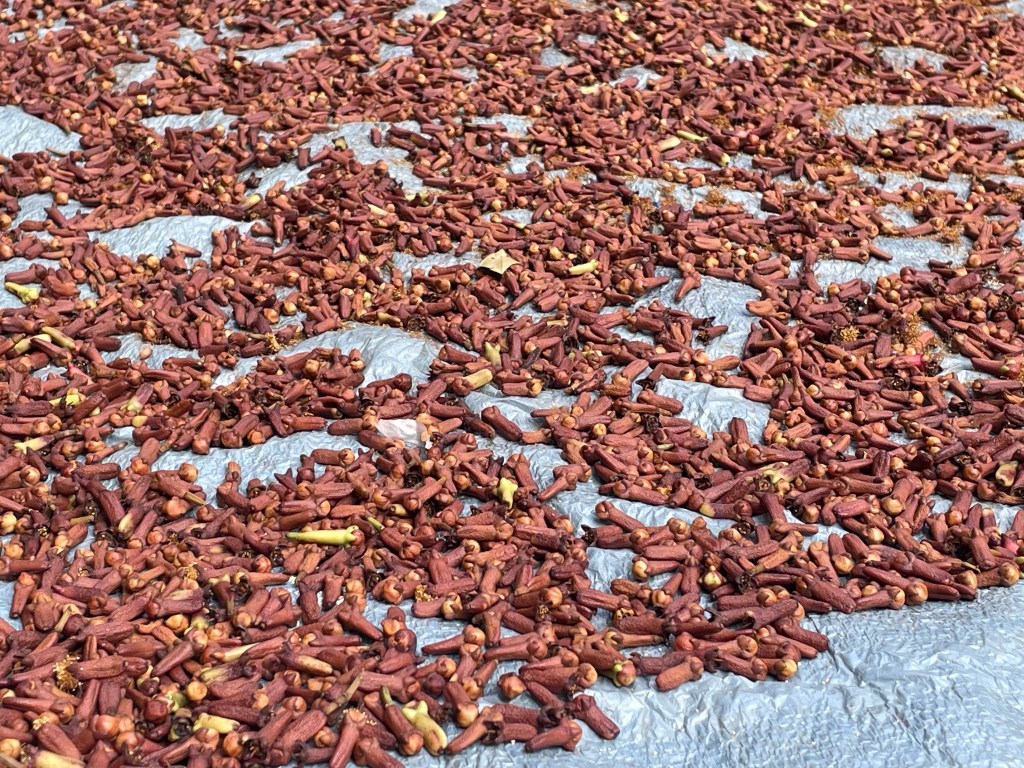
Ilan says it’s tradition for a couple who want to get married to plant ten Clove trees. Hence the prevalence of the spice! There is also nutmeg and cardamon.
The locals are friendly, curious and helpful. Not once, but twice we broke down on our motorbike and help was offered within minutes. They are always up for a photo and a chat.
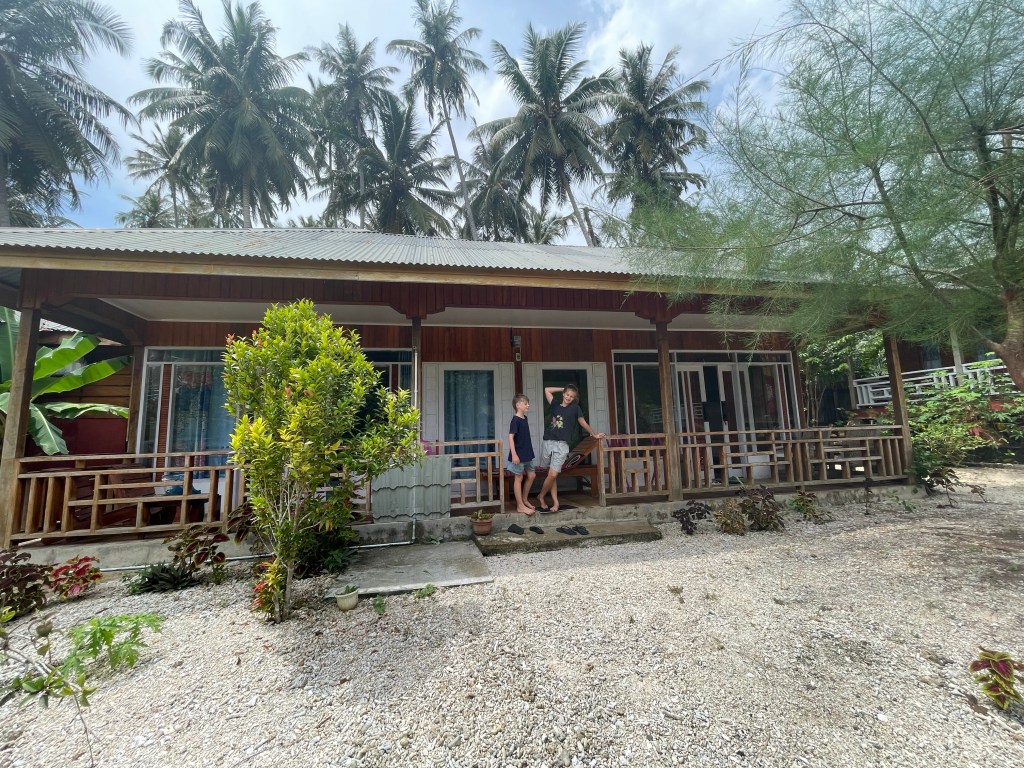
I’ve been puzzled by the western look of Simeulue’s houses, which lack the ornamental splendour of Bali’s outdoor-centric dwellings. With pitched rooves and slated window shutters, they are painted in bright colours, a friendly mint green, yellow or light blue.
But there is a reason.
In 2004, the epicentre of the massive 9+ earthquake, which caused the devastating Boxing Day tsunami, was located just north of Simeulue. The disaster killed more than 225,000 people acros Indonesia, Sri Lanka, Thailand and the Maldives.
Miraculously, none of the Simeuluans died in the catastrophe (more on that and ‘Smong’ later), but all it’s buildings were flattened.
Along with a range of NGOs, German aid agency Welthungerhilfe helped to rebuild the island. Over ten months they constructed hundreds of lightweight wooden houses. Hence the trademark European style!
Each of the 130-odd desas (villages) consisting of roughly 20-30 homes has at least one Mosque, and prayer calls farewell and welcome the days.
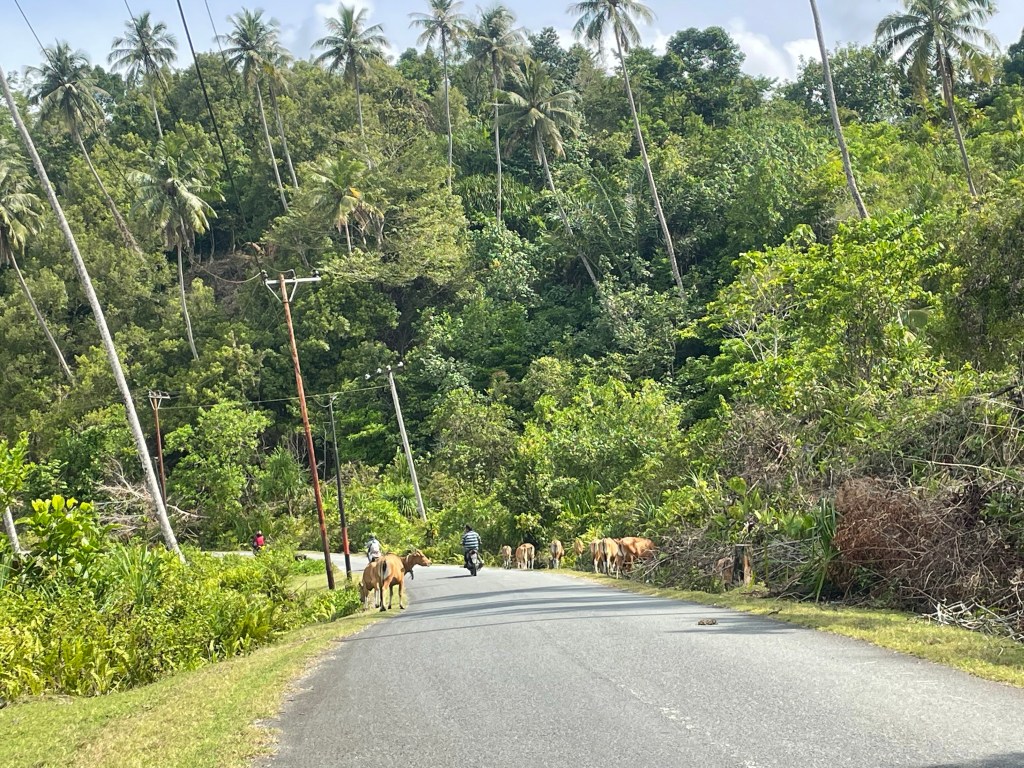
It’s a world away from Bali’s massive hotels, department stores, restaurants, cafes, spas, beauticians and the ear-shattering traffic that comes with it.
The beaches are clean and there is an untouched, rural quality about the rolling green meadows, dotted by palm trees, weaving around the coral reef of the coastline.
Reef is exposed on the edges of most beaches after another big earthquake shook Simeulue in 2005, lifting the island by almost two metres. Incidentally, the tectonic shift created several new surfbreaks.
The surf is plentiful, world-class and uncrowded. More and more local kids have started taking up surfing and it won’t be long until we see the groms from Simeulue join the world surfing circuit.
How to get there?
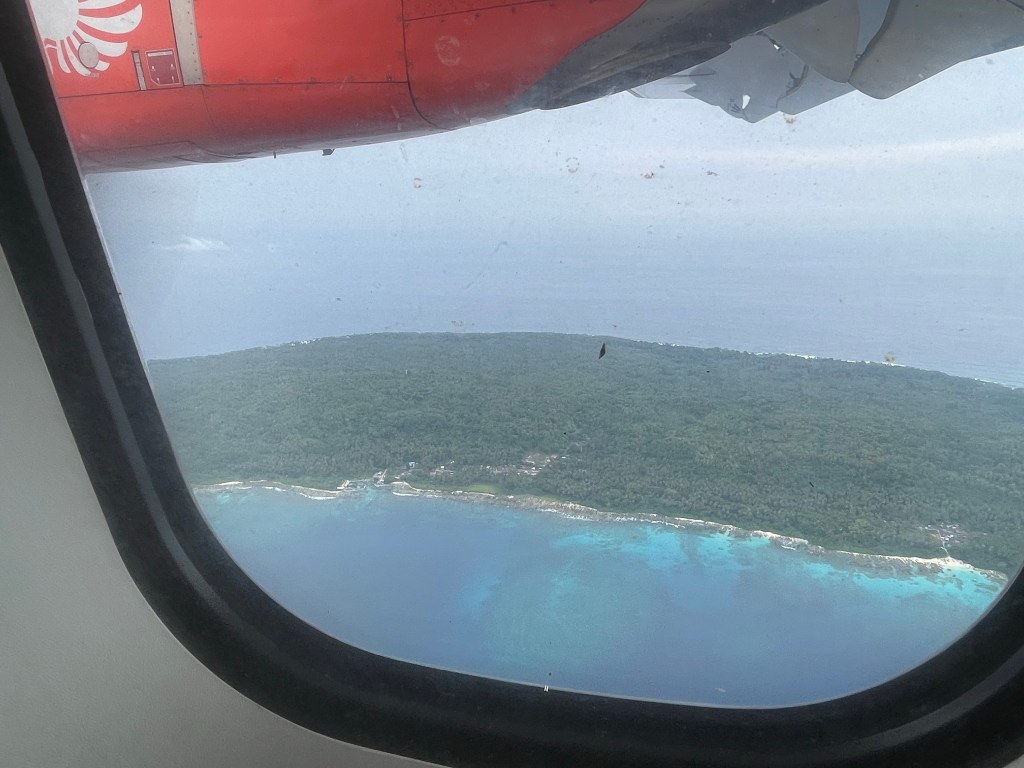
Flights ($70) to the island leave three times a week from Sumatra’s capital Medan in a small propeller plane. I had buckled up for some gruelling travel days.
But, the trip from Denpasar, Bali was really smooth and relaxed. We flew to Medan via Jakarta (about $150 pp) and stayed the night at the airport hotel. We are cheapskates and squeezed into a double room with extra bed ($80/$110).
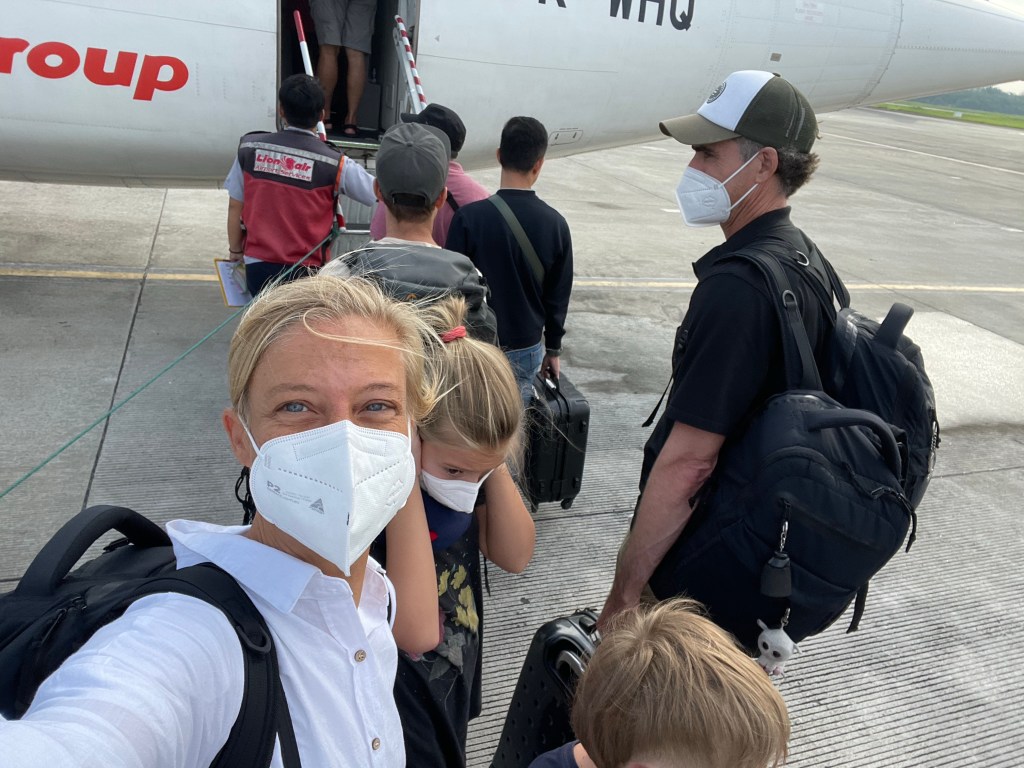
Well slept and with a delicious local breakfast in our bellies we grabbed our bags and went to the check in for Simeulue.
There was a bit of anxiety around this as you can’t pre-book luggage on the flight, but our massive surfboard bag, two other bags, and our heavy school case cost us a very digestible $200.
Matt was under the impression that the small planes can only take a limited amount of luggage and sometimes surfboards get left behind. Naturally he made sure we were on top of the cue as slowly other surfers and their massive surf quivers gathered at the check in.
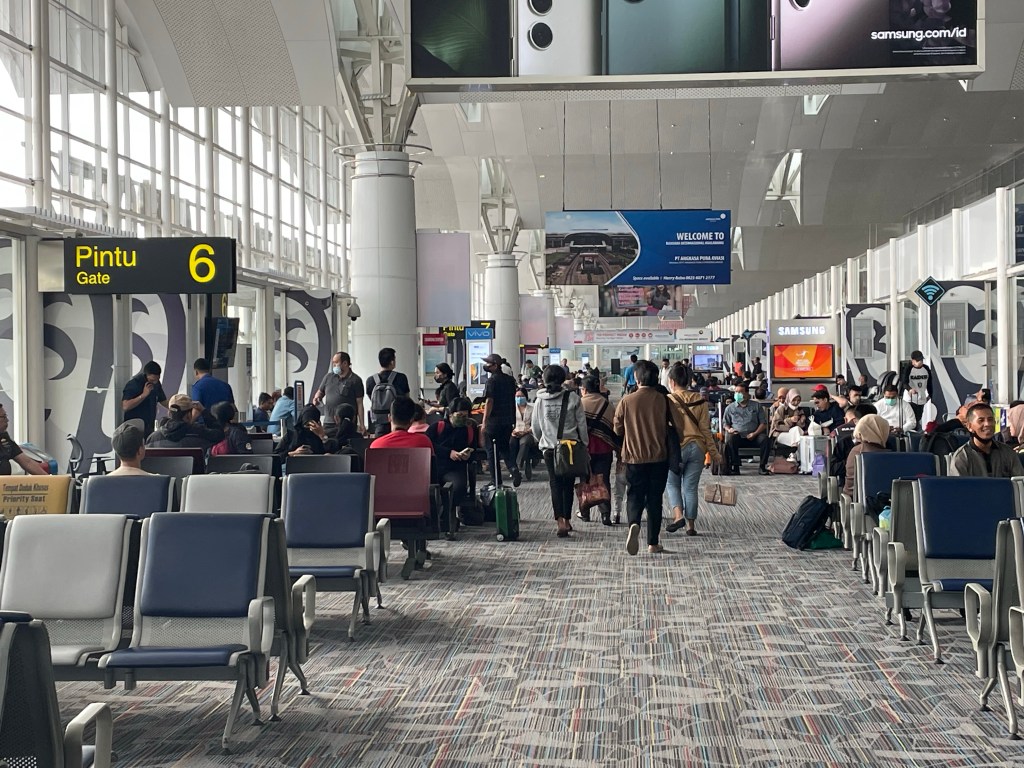
I was fretting about the flight and seeing the plane on the tarmac made me even more anxious. It was pretty small. But the flight was great, no more unsettling than any other, and boasted incredible views over the green ridges of central Sumatra, the coastline and the small islands off its shores.
Good to know
As mentioned before, the population on Simeulue is Muslim so appropriate clothing when leaving the surf compounds is a must.
For women that means long pants and at least T-shirt. I’ve been wearing a loose blouse as well when meeting with people, and for my runs I wear a large T-shirt and long leggings.

I get lots of interested looks and the odd thumbs up when I trot along with my camelback.
Within the gates of the surf camp the rules are more relaxed. I personally feel it’s still important to consider the culture you’re in, so I would leave the skimpy ‘kinis and G-bangers at home.

It’s best to bring everything you may need for your stay. There are small shops and I’m sure you can get your hands on most things, but it can be a bit of a mission. Depending on where you are staying, Sinabang can be a half-hour drive away. You will need some wheels to get around the island and hop between surf breaks.
So better take all your essential toiletries/ electronics/ medications, surf apparel, insect repellent and plenty of cash and with you. There are shops to top up phone data.
Accommodation
You can stay on this beautiful palm tree-lined coast in a handful of surf camps, bungalows scattered on bright grassy properties which are located around the many empty surf breaks of Simeulue.
There are varying degrees of luxury, but the cost of you stay generally includes three meals a day, coffee, drinking water, a motorbike, some tour-guiding and in the fancier camps even yoga.
Where we are staying

We are staying in a cosy local-run place called Coconut Island Surf Stay. Our hosts Ilan and his wife Yanti are a very well respected family on the island. Ilan is also the only surf guide and he knows every nook and cranny and jungle-concealed barrel on Simeulue.
The kids, Matt and I are in two spacious adjoining rooms complete with a bathroom each and air-conditioning and wifi, virtually 10 metres from the ocean. With coffee, young coconuts galore, juices and three delicious and freshly prepared meals we are looked after in very way and encouraged to feel at home.
Kota Iida, a young professional surfer from Japan, is also staying here. It’s not hard to guess why he would come here twice a year pre-pandemic.
The deciding factor to stay here among several other choices was not predominantly the competitive price. We wanted to stay with a local family and I was blown away by the great communication I had with Ilan leading up to our trip.
He patiently and promptly answered all my many questions, accommodated requests about rooms, mosquito nets and travel info requirements. Those first impressions were fast superseded by Ilan in person, and what we are getting at Coconut Island goes far beyond food and accommodation.
Louise and Sam are having the experience of a lifetime thanks to Ilan. They have visited a local school, attended two (!) local weddings, have gone fishing, learned how to hypnotise chickens, how to wield a machete and sing a local nursery rhyme.
He’s taking them on sunset rides to beautiful beaches, shopping at the fish market and to play soccer with the local kids.
It’s the kind of cultural immersion I hoped our children would have and Ilan is more than generous in sharing his time with us to learn about the culture of his home.
There is so much giggling going on, you can’t help but smile all day.
How Smong saved Simeulue
Simeulue was in the crosshairs of the 2004 Boxing Day tsunami, which killed more than 225,000 people across Indonesia, Sri Lanka, India, Maldives and Thailand.
The epicentre of this 9.3 magnitude earthquake was just north of Simeulue, but mass casualties on the island were avoided thanks to to songlines and storytelling which were conserved over generations.
About 100 years earlier, in 1907, a massive earthquake and subsequent tsunami hit the island. After the earth rumbled, the water receded off the reef, exposing large amounts of fish. Residents rushed to collect the fish, only for the water to return with a vengeance (BBC News, Saved by Tsunami folklore).
This story of the disaster was passed down and Ilan tells us he was sung the story of ‘Smong’ as a lullaby when he was a small child.
So when the water receded following the earthquake in 2004, people knew how to interpret the phenomenon and run for higher ground.
These are the lyrics to the local song according to The Conversation (2018).
Enggel mon sao curito (Hear this story) / Inang maso semonan (One day in the past) / Manoknop sao fano (Our village sinks) / Unen ne alek linon (Starting with the earthquake) / Fesang bakat nemali (Then followed by rising waves) / Manoknop sao hampong (Sinking the whole village) Tibo-tibo mawi (Immediately) / Anga linon ne mali (If a strong earthquake occurs) / Uwek suruik sahuli (Followed by the receding sea water) / Maheya mihawali (Hurry) / Fano me senga tenggi (Run to the higher place).
The Simeulue community cleverly closes all the stories about earthquakes and tsunamis by placing the following sentence: Eda Smong kahanne (That’s what we call smong).
Thanks to the song and its message the Boxing Day event only claimed two lives on Simeulue, and Ilan says the men died of shock, not the floodwaters.
Smong (Run) has since attracted the attention of disaster prevention researchers and the local community want it to become part of the Indonesian vocabulary, providing the basis for a new understanding of the tsunami disaster.
Ilan says hes disappointed Smong hasn’t found its way yet in the Indonesian dictionary as its the only word describing the whole event, the earthquake, the receding waters and the floodwave. He hopes the island will one day have a museum dedicated to Smong.
 Pack Less
Leave a comment